
The Multi-Billion Dollar Mistake
Novo Nordisk and the Paradox of Patent Maintenance
Key Takeaways:
- The Cost of Clerical Error: A single, missed administrative fee led to the premature expiration of a valuable Novo Nordisk patent in Canada, opening the door for generics in 2026 and illustrating how mundane upkeep risks billions
- The Paradox of Patent Maintenance: Corporations risk high-value assets not just in courtrooms but through routine tasks like renewal deadlines and annuity payments
- Maintenance & Enforcement Are Connected: The decision to renew a patent must be aligned with its real, measurable threat of infringement and its potential for meaningful return
- The Real Question: In today's climate, the question shifts from “Should we renew this patent?” to “Do we know what we risk if we don’t?”
- Action for Budget Season: Companies must move from inertia to foresight, reassessing and realigning IP maintenance decisions with enforcement value, especially as 2026 budgets are prepared
💡 The Multi-Billion Dollar Mistake: Novo Nordisk and the Paradox of Patent Maintenance
When Yulia Druzhnikova and Alex Levin pitch PioneerIP, they touch on the important topic of small mistakes. In the world of IP, the smallest misstep can carry the weight of billions.
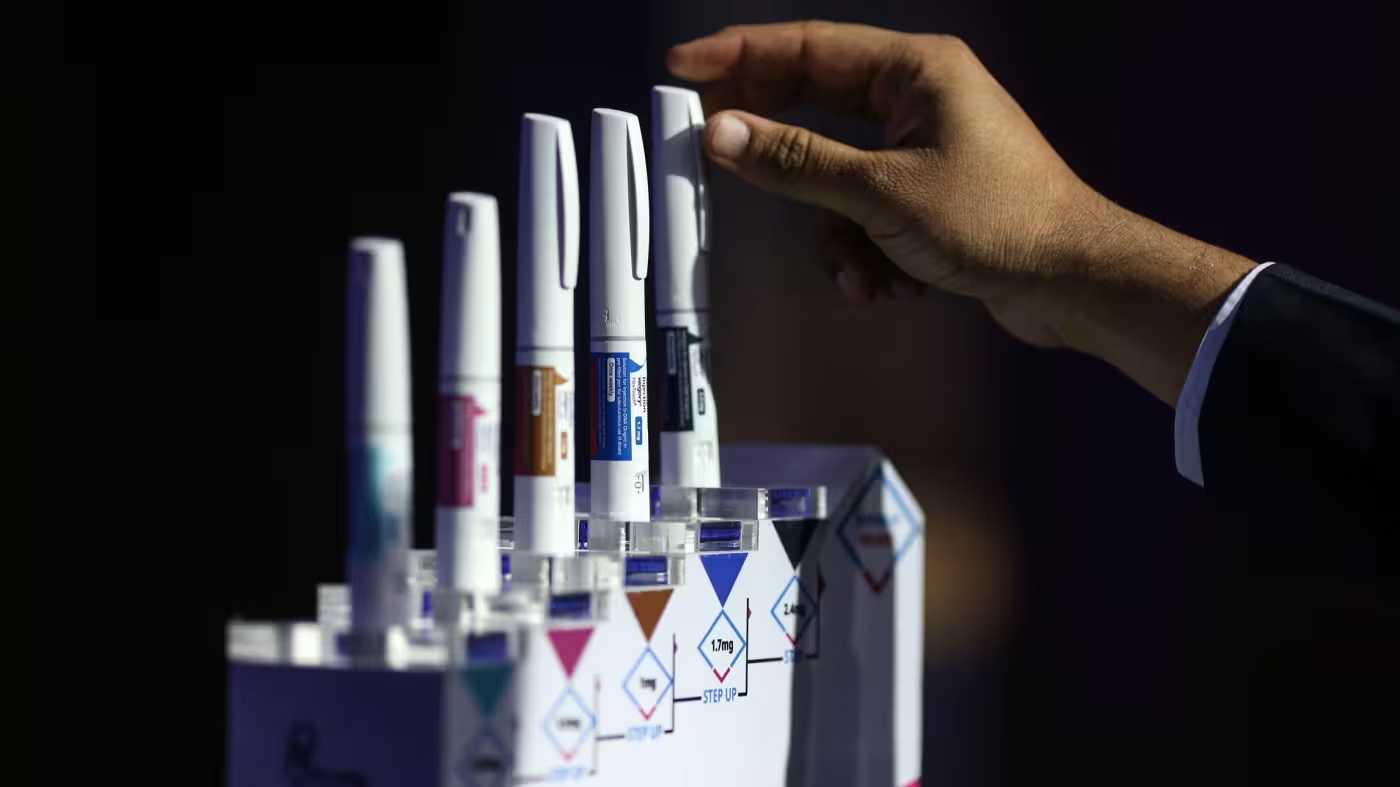
Take Novo Nordisk. The company behind Ozempic and Wegovy holds one of the most valuable pharmaceutical portfolios of our time. Yet, amid lawsuits, compounding loopholes, and global shortages, a far quieter event occurred: a patent expired in Canada. Not because of litigation. Not because of innovation. Because of a missed administrative fee. Take a look at the insightful article in the Financial Times.
That oversight opened the door for generics in 2026. A single clerical lapse, and the monopoly that underpins years of R&D begins to erode.
The Paradox of Patent Maintenance
This is the paradox of patent maintenance. On one hand, corporations wage high-stakes battles in courtrooms, defending exclusivity against distributed networks of infringers. On the other, they risk everything through the mundane — renewal deadlines, annuity payments, and jurisdictional complexity. The strength of a patent isn’t just written in its claims. It’s in the rigour of its upkeep.
And here’s the twist: #enforcement and #maintenance aren’t separate challenges. They are deeply connected. The value of maintaining a patent depends on the real, measurable threat of infringement. Why pay millions in fees across dozens of markets if the underlying rights can’t be defended — or worse, won’t generate meaningful return?
Foresight, Not Inertia
At PioneerIP, we believe companies should never face this decision in the dark. Our infringement intelligence platform provides clarity:
- Where and how your patents are at risk.
- What revenue streams are truly protected.
- And how those insights should shape maintenance decisions.
As corporations prepare for their 2026 budgets, the urgency is clear. Our clients share that IP departments are being asked to do more with less. CFOs want leaner IP portfolios. General counsel want defensible assets. CEOs want certainty.
The question is no longer simply: Should we renew this patent?
The real question is: Do we know what we risk if we don’t?
Novo Nordisk’s story is a cautionary tale, but also an invitation. A reminder that in today’s climate — with compounding pharmacies, cross-border loopholes, and political pressure on pricing — the companies that thrive will be those that maintain with foresight, not inertia.
This budget season, don’t just renew. Reassess. Refocus. Realign maintenance with enforcement value.
Original Post Credit: This article was originally posted by Yulia on LinkedIn. You can view the original post and comments here: Link to the LinkedIn Post
.png)

.png)